What does a $300-a-night mountain rental actually pay a year?
Ask that question before you look at any spreadsheet and most buyers do the same arithmetic: $300 times 365 nights, minus a little for slow weeks, and the number that lands feels close to six figures. It is the math that makes a rental purchase in Big Canoe look like an easy decision from the outside. It is also the math that has nothing to do with what the home will actually earn.
The gap between that back-of-napkin number and the real one is where this piece lives. Big Canoe has an established, active short-term rental market, supported by property managers who work the community full time, names like Southern Comfort Cabin Rentals and Mountain Vista Rentals among them. What it does not have is a nightly rate that behaves the way buyers expect it to.
The Number on the Flyer Isn't the Number in the Bank
Start with what the market actually reports. Across the twelve months ending April 2026, average daily rates for Big Canoe short-term rentals ran in the $300-plus range, according to both a Big Canoe-focused brokerage market report and independent short-term rental data. That part of the story checks out and it is the part most buyers hear first.
The part they hear second, if they hear it at all, is occupancy. Average occupancy across the same period sat at 34.8 percent, according to short-term rental analytics platform AirROI. That is not a soft season, that is the whole year, blended.
Multiply the two together and you get a more honest single number: revenue per available night, or RevPAR, which lands around $110 in Big Canoe. That figure does the job the $300 rate cannot, because it already has the empty nights baked in.
The spread between properties tells the same story from a different angle. The median Big Canoe listing generated about $2,606 a month in the trailing twelve months through April 2026. The top 10 percent of listings cleared $6,947 a month or more in that same window. Average annual revenue across the market landed around $28,412, which lines up closely with a separate brokerage estimate putting typical gross rental revenue in the low $30,000s a year. Two different data sources, two different methods, landing in roughly the same place is a good sign the number is real rather than a quirk of one dataset.
None of that spread comes from a different nightly rate. It comes from occupancy, and occupancy comes from what actually rents.
Why Occupancy Sits Where It Sits
Big Canoe's short-term rental inventory is entirely entire-home listings. There is no shared-space or single-room segment pulling the average down, which means the 34.8 percent occupancy figure is not being dragged there by a category of weak performers. It is the ceiling for the market as it currently exists.
Within that inventory, three-bedroom houses represent the largest single segment of active rentals, and houses overall make up 58 percent of listings. Guests booking Big Canoe are planning ahead, too. Average booking lead time runs around two months, which points to travelers organizing a mountain trip in advance rather than grabbing a same-week deal, a pattern that tends to support steadier pricing but does not do much to fill last-minute gaps.
Then there is the calendar itself. July is the peak revenue month. February is reliably the weakest. That is a five-month swing between the top and bottom of the year, and it means even a well-run, well-priced listing is fighting a seasonal ceiling that no amount of marketing removes. A buyer comparing Big Canoe to a beach or ski market with a longer high season is comparing markets with fundamentally different occupancy ceilings, not just different price points.
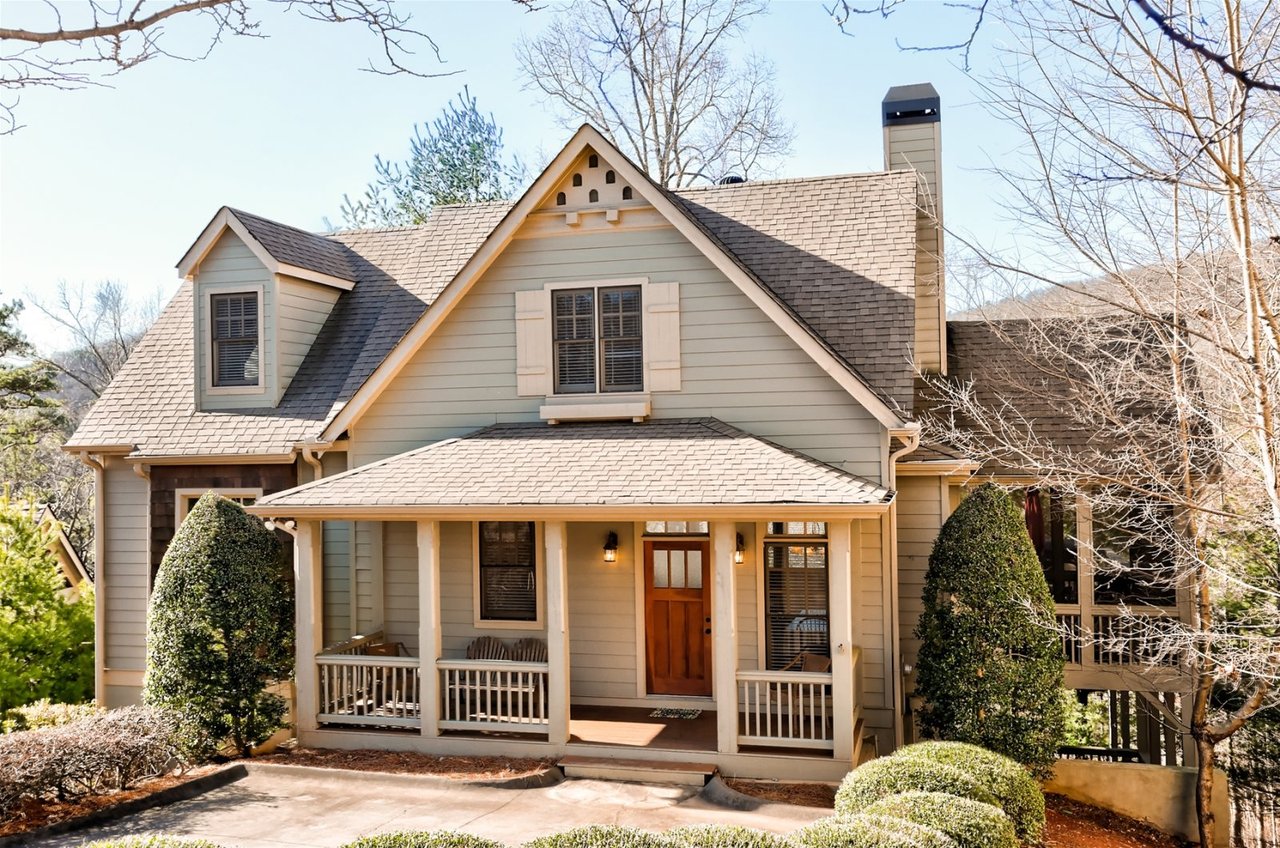
The buyers who land closer to the top 10 percent than the median tend to be matching the property to what the data already shows renting: three or more bedrooms, entire-home privacy, and amenities like a hot tub or lake view that give a listing something to sell beyond the address. A two-bedroom condo bought because it was the cheapest entry point into Big Canoe is competing against a market that is mostly asking for something else.
The Rules That Turn a Listing Into a Compliance Project
Big Canoe's own rules add a second layer most out-of-area buyers do not budget time for before closing.
- Short-term is formally defined as anything under 30 days. Anything at or above that is treated as a long-term lease, with its own registration path.
- Only the entire home can be rented. Big Canoe's covenants do not allow an owner to rent out a portion of a house while living in or otherwise occupying the rest.
- Occupancy is capped at two people per permitted bedroom, plus two additional individuals, which ties directly back to the bedroom count on file with the county, not the bedroom count in the listing photos.
- Guests are entered into the community's DwellingLIVE access system by the property owner or a registered agent, never by the renter calling it in directly to Public Safety.
- Before a home can be marketed at all, it has to be registered with Big Canoe's Architectural and Environmental Control Department. Both Pickens and Dawson counties, depending on where the lot sits, layer their own registration requirement on top of that.
None of this is unusual for a gated, covenant-governed community. What is easy to miss is that it is sequential. Registration has to happen before the listing goes live, not after the first booking, and a buyer who skips that order can end up with a home under contract and no legal way to advertise it yet.
Two Costs That Don't Show Up in the Listing Photos
The POA has also shown, more than once, that it treats rental income as a distinct line item rather than something that rides along free.
In late 2022, as part of the 2023 budget cycle, the board put an annual fee for owners who lease their homes to a property-owner vote. It is a small detail on its own, but it signals something worth planning around: rental income in Big Canoe has never been treated as costless to the association, and buyers underwriting a purchase should confirm the current fee structure directly with the POA rather than assume last year's number still holds.
The bigger and more recent change sits at the state level. Georgia's Human Trafficking Prevention Training Act, known as SB 570, took effect July 1, 2026, and it applies to every operator of a short-term rental property in the state, not just hotels. Covered hosts have to complete approved training within 60 days of starting to operate, repeat it annually, adopt a policy for reporting suspected trafficking, and post the notice required under Georgia law. Records have to be kept for three years after a host stops operating. Willful violations carry real penalties: $500 for a first offense, $1,000 for a second, and $2,000 for a third or later one.
That law is a little over two months old as of this writing. It applies whether or not a buyer uses a professional management company, and it is exactly the kind of new requirement that a first-time investor coming from outside Georgia would have no reason to know about.
What This Means If You're Underwriting a Purchase
If you are comparing Big Canoe against another mountain market on a spreadsheet, the nightly rate is the least useful number on the page. Occupancy is what turns a rate into revenue, and in Big Canoe that number sits in the mid-30s, which is what makes RevPAR, not ADR, the honest starting point for any pro forma.
That math sits on top of a purchase market that has its own current shape. As of mid-2026, Big Canoe's median sale price runs between $725,000 and $835,000, up more than 15 percent year over year by one measure, with homes moving in roughly 65 to 70 days on average, a faster pace than a year earlier. A buyer running rental numbers against that price point needs the RevPAR-based revenue estimate, the property type that actually fills calendars, and the registration and compliance sequence in hand before an offer goes in, not after.
The homes that outperform the median in Big Canoe's rental data are not the cheapest way in. They are three-bedroom-plus entire homes with a feature that gives a guest a reason to book two months out. Everything else, from the AECD paperwork to the new state training requirement, is the cost of doing that correctly rather than finding out about it after the first guest arrives.
A Few Questions Worth Settling Before You Close
Can I rent out just a room instead of the whole house? No. Big Canoe's covenants allow rental of the entire home only. A homeowner living on site while renting a bedroom or basement apartment is not a permitted arrangement.
Do I need to register with the county as well as the POA? Yes. Both Pickens and Dawson counties, whichever one your lot sits in, require rental property owners to register at the county level in addition to registering with Big Canoe's Architectural and Environmental Control Department.
If I hire a management company, do they handle the new state training requirement for me? Not automatically. Georgia's SB 570 applies to every operator of a short-term rental property. Before you close, confirm in writing with your management company whether they are completing that training on your behalf or whether it remains your obligation as the owner.
If you are weighing a Big Canoe purchase against the income it might realistically produce, the conversation is easier with someone who has run these numbers before. Steve Yambor has spent nearly two decades in this community and can walk through what a specific home, in a specific neighborhood, is likely to actually earn once the occupancy math and the compliance calendar are both on the table. Let's connect.